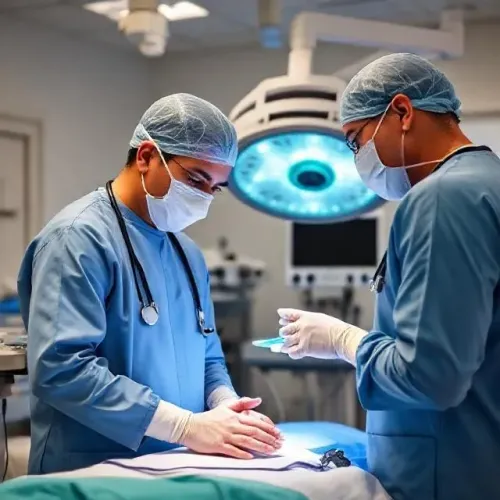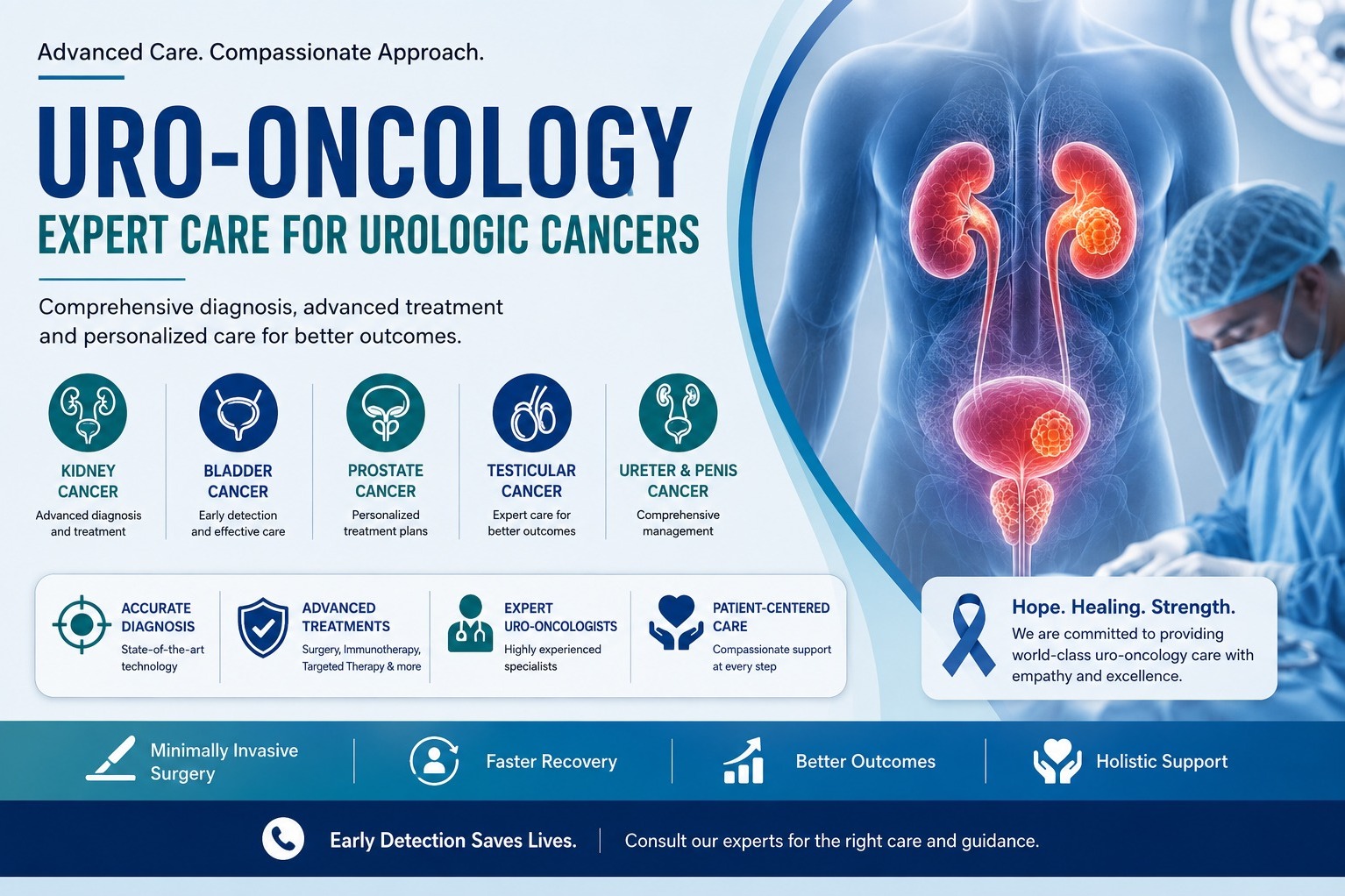
Uro-Oncology – Expert Care for Urologic Cancers
**Advanced Care. Compassionate Approach.**
Uro-oncology is a specialized branch of urology focused on the diagnosis, treatment, and management of cancers affecting the urinary and male reproductive systems. Early evaluation, accurate diagnosis, and an individualized treatment plan are important for managing urologic cancers effectively.
Our uro-oncology services combine modern diagnostic techniques, advanced treatment options, minimally invasive procedures, and patient-centered care to support patients throughout their treatment journey.
## Kidney Cancer
Kidney cancer develops in the tissues of the kidneys and may be detected through imaging or other diagnostic investigations. Treatment depends on factors such as the type, size, location, and stage of the tumor.
**Treatment may include:**
* Detailed diagnostic evaluation
* Active surveillance for selected cases
* Partial or radical nephrectomy
* Minimally invasive and laparoscopic surgery
* Advanced surgical management for appropriate patients
## Bladder Cancer
Bladder cancer commonly begins in the inner lining of the bladder. Evaluation may involve imaging, urine tests, cystoscopy, and tissue examination.
**Bladder cancer care may include:**
* Early diagnosis and staging
* Cystoscopic evaluation
* Transurethral procedures
* Intravesical treatment when indicated
* Major bladder surgery for selected advanced cases
* Regular follow-up and surveillance
## Prostate Cancer
Prostate cancer is one of the most common cancers affecting men. Early detection and appropriate risk assessment can help guide treatment decisions.
**Prostate cancer management may include:**
* PSA testing and clinical evaluation
* Prostate imaging and biopsy when required
* Active surveillance for selected patients
* Surgical treatment such as prostatectomy
* Radiation, hormonal, or other systemic treatments when appropriate
* Long-term monitoring and follow-up
## Testicular Cancer
Testicular cancer can affect men at different ages and is often highly treatable, particularly when detected early.
**Care may include:**
* Clinical examination and imaging
* Tumor-marker evaluation
* Surgical treatment
* Chemotherapy or other treatments when indicated
* Follow-up monitoring
## Ureter & Penile Cancer
Cancers affecting the ureters and penis require specialized evaluation and treatment planning. Treatment depends on the cancer's location, type, stage, and overall health of the patient.
**Management may include:**
* Detailed diagnostic assessment
* Endoscopic or surgical procedures
* Organ-preserving approaches when clinically appropriate
* Reconstruction when required
* Additional cancer treatment and follow-up based on individual needs
## Advanced Uro-Oncology Care
### Accurate Diagnosis
Modern diagnostic methods help identify the location and characteristics of urologic cancers and assist specialists in determining the appropriate treatment approach.
### Advanced Treatment Options
Depending on the cancer and its stage, treatment may involve surgery, minimally invasive procedures, radiation therapy, chemotherapy, immunotherapy, targeted therapy, hormonal therapy, or active surveillance.
### Minimally Invasive Surgery
For appropriately selected patients, laparoscopic or robotic-assisted procedures may offer smaller incisions and potentially support recovery.
### Patient-Centered Care
Cancer treatment involves more than the procedure itself. Comprehensive care includes pre-treatment counseling, treatment planning, postoperative care, follow-up, and support throughout the patient's journey.
## Hope. Healing. Strength.
**Early detection and timely medical evaluation are important in the management of urologic cancers.** If you experience concerning urinary symptoms, blood in the urine, unexplained changes in urinary habits, a testicular lump or swelling, or other persistent symptoms, consult a qualified urologist or uro-oncology specialist.
**Consult a uro-oncology specialist for personalized diagnosis, treatment planning, and ongoing cancer care.**
**Advanced Care. Compassionate Approach.**
Uro-oncology is a specialized branch of urology focused on the diagnosis, treatment, and management of cancers affecting the urinary and male reproductive systems. Early evaluation, accurate diagnosis, and an individualized treatment plan are important for managing urologic cancers effectively.
Our uro-oncology services combine modern diagnostic techniques, advanced treatment options, minimally invasive procedures, and patient-centered care to support patients throughout their treatment journey.
## Kidney Cancer
Kidney cancer develops in the tissues of the kidneys and may be detected through imaging or other diagnostic investigations. Treatment depends on factors such as the type, size, location, and stage of the tumor.
**Treatment may include:**
* Detailed diagnostic evaluation
* Active surveillance for selected cases
* Partial or radical nephrectomy
* Minimally invasive and laparoscopic surgery
* Advanced surgical management for appropriate patients
## Bladder Cancer
Bladder cancer commonly begins in the inner lining of the bladder. Evaluation may involve imaging, urine tests, cystoscopy, and tissue examination.
**Bladder cancer care may include:**
* Early diagnosis and staging
* Cystoscopic evaluation
* Transurethral procedures
* Intravesical treatment when indicated
* Major bladder surgery for selected advanced cases
* Regular follow-up and surveillance
## Prostate Cancer
Prostate cancer is one of the most common cancers affecting men. Early detection and appropriate risk assessment can help guide treatment decisions.
**Prostate cancer management may include:**
* PSA testing and clinical evaluation
* Prostate imaging and biopsy when required
* Active surveillance for selected patients
* Surgical treatment such as prostatectomy
* Radiation, hormonal, or other systemic treatments when appropriate
* Long-term monitoring and follow-up
## Testicular Cancer
Testicular cancer can affect men at different ages and is often highly treatable, particularly when detected early.
**Care may include:**
* Clinical examination and imaging
* Tumor-marker evaluation
* Surgical treatment
* Chemotherapy or other treatments when indicated
* Follow-up monitoring
## Ureter & Penile Cancer
Cancers affecting the ureters and penis require specialized evaluation and treatment planning. Treatment depends on the cancer's location, type, stage, and overall health of the patient.
**Management may include:**
* Detailed diagnostic assessment
* Endoscopic or surgical procedures
* Organ-preserving approaches when clinically appropriate
* Reconstruction when required
* Additional cancer treatment and follow-up based on individual needs
## Advanced Uro-Oncology Care
### Accurate Diagnosis
Modern diagnostic methods help identify the location and characteristics of urologic cancers and assist specialists in determining the appropriate treatment approach.
### Advanced Treatment Options
Depending on the cancer and its stage, treatment may involve surgery, minimally invasive procedures, radiation therapy, chemotherapy, immunotherapy, targeted therapy, hormonal therapy, or active surveillance.
### Minimally Invasive Surgery
For appropriately selected patients, laparoscopic or robotic-assisted procedures may offer smaller incisions and potentially support recovery.
### Patient-Centered Care
Cancer treatment involves more than the procedure itself. Comprehensive care includes pre-treatment counseling, treatment planning, postoperative care, follow-up, and support throughout the patient's journey.
## Hope. Healing. Strength.
**Early detection and timely medical evaluation are important in the management of urologic cancers.** If you experience concerning urinary symptoms, blood in the urine, unexplained changes in urinary habits, a testicular lump or swelling, or other persistent symptoms, consult a qualified urologist or uro-oncology specialist.
**Consult a uro-oncology specialist for personalized diagnosis, treatment planning, and ongoing cancer care.**
Keywords